A Comprehensive Guide to Navigating IRMAA Brackets and the Appeal Process
Navigating the complexities of the Income-Related Monthly Adjustment Amount (IRMAA) can be an overwhelming task for Medicare recipients. Recognizing how earnings limits affect premiums is critical for effective monetary preparation. Many individuals might not understand the implications of higher incomes on their medical care costs. As they check out the subtleties of IRMAA and the allure procedure, they may uncover necessary approaches to manage their expenses a lot more successfully. This guide will illuminate the path ahead.
Recognizing IRMAA: What It Is and Just how It Functions
The Income-Related Monthly Adjustment Amount (IRMAA) is an essential element of Medicare that impacts recipients with greater earnings. This change is made to make certain that people who earn above a certain threshold contribute more towards their Medicare Part B and Part D costs. The IRMAA operates a sliding range, meaning that as a recipient's revenue boosts, so does their premium quantity. This method intends to promote equity in the Medicare system by distributing prices according to income degrees.
The Social Safety Administration figures out IRMAA based on the recipient's modified adjusted gross earnings from two years prior. If individuals discover themselves facing an unexpected boost in their costs as a result of IRMAA, they may have alternatives for allure. Comprehending the nuances of IRMAA is important for recipients, as it directly influences their regular monthly medical care costs and financial preparation relevant to Medicare protection.
Revenue Brackets and Their Effect On Medicare Premiums
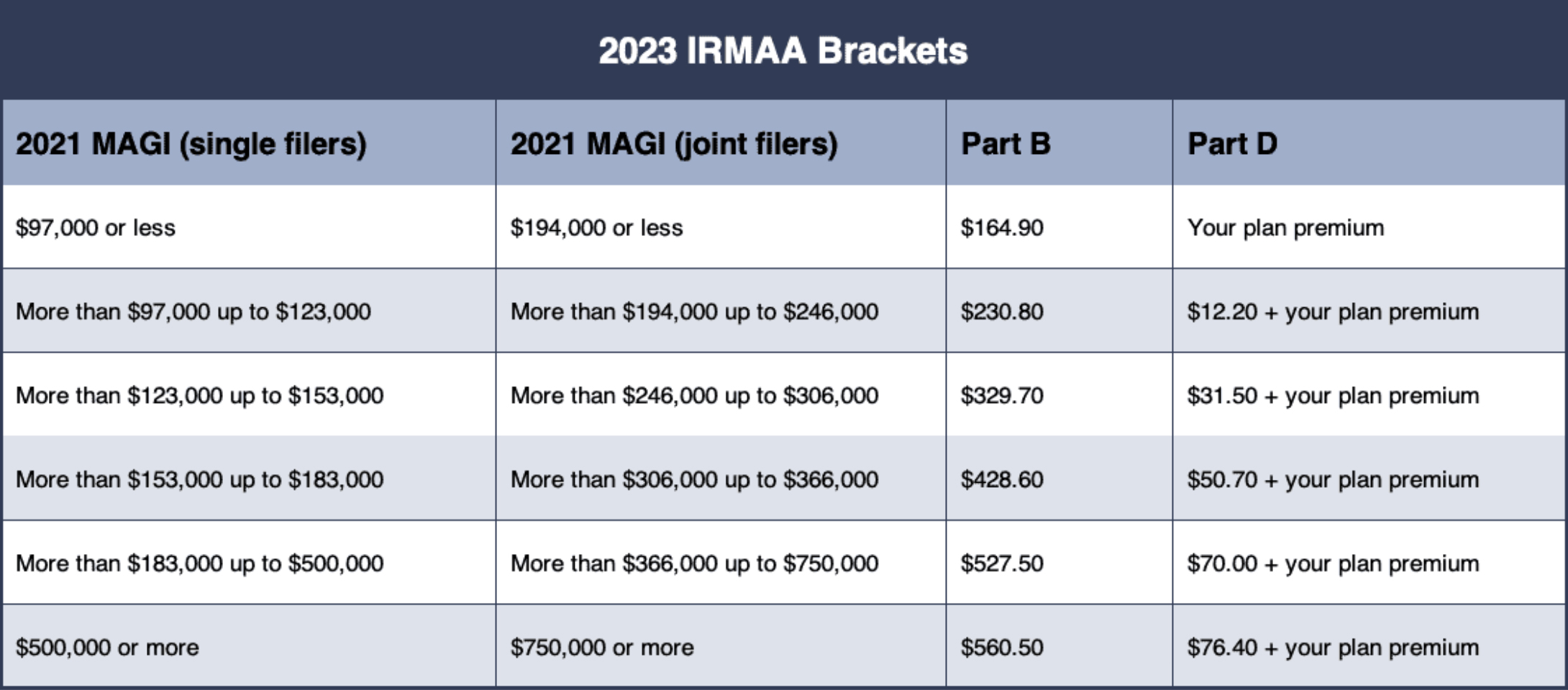
While several beneficiaries count on Medicare for vital healthcare insurance coverage, earnings brackets considerably influence the costs they pay for Component B and Part D. The Centers for Medicare & & Medicaid Services (CMS) develops these brackets based upon modified adjusted gross earnings (MAGI) from two years prior. As recipients' income degrees rise, so do their costs, commonly bring about greater prices for those earning over specific thresholds.
For 2023, people making over $97,000 and couples making over $194,000 face increased costs, with rates intensifying via numerous tiers. This framework aims to make sure that higher-income beneficiaries contribute even more toward the expense of their insurance coverage. As a result, recognizing these income brackets is vital for recipients, as it straight influences their economic preparation and healthcare access. Awareness of just how revenue degrees impact Medicare costs can help beneficiaries navigate their options and avoid unforeseen costs associated with their health care protection.
How IRMAA Is Calculated: A Detailed Malfunction
Comprehending how IRMAA (Income-Related Monthly Adjustment Amount) is calculated is essential for Medicare recipients encountering boosted costs. The calculation starts with the beneficiary's modified adjusted gross income (MAGI), which includes adjusted gross earnings plus tax-exempt rate of interest. This earnings is assessed based on the most recent tax return, generally from two years prior.
The Social Safety And Security Administration (SSA) categorizes beneficiaries right into various IRMAA braces, each matching to a certain MAGI variety. As earnings increases, so does the premium adjustment, leading to greater month-to-month prices for Medicare Part B and Part D.
Beneficiaries might discover their IRMAA amount on their Medicare Premium Costs. It is critical for people to remain educated regarding their earnings status, as variations can affect their IRMAA computations and ultimately their medical care costs. Understanding these actions help in effective monetary preparation for Medicare beneficiaries.

Navigating the Appeal Process: When and Exactly How to Appeal IRMAA Determinations
Browsing the appeal process for IRMAA decisions can be a crucial step for recipients that think their income evaluation is inaccurate. Launching a charm calls for recognizing the particular premises for opposing the IRMAA decision, which typically revolves around income inconsistencies or certifying life events that might influence one's income degree. Recipients need to collect appropriate documents, such as income tax return or evidence of revenue changes, to corroborate their cases.
The appeal should be submitted in contacting the Social Protection Management (SSA) within 60 days of the first resolution. It is necessary to adhere to the SSA's guidelines carefully, including offering your Medicare number and clear information concerning the allure. When submitted, the SSA will assess the case and inform the recipient of their decision. If the appeal is unsuccessful, further steps, including a reconsideration demand or a hearing, can be sought to guarantee all opportunities are discovered.
Tips for Taking Care Of Healthcare Expenses Connected To IRMAA
As recipients encounter raised healthcare costs because of IRMAA, carrying out reliable strategies can help manage these costs a lot more successfully. Assessing one's revenue consistently is essential; fluctuations may certify people for reduced IRMAA braces. Furthermore, checking out choices such as Medicare Cost savings Programs or state support can supply monetary alleviation.
Beneficiaries need to likewise take into consideration using preventive solutions covered by Medicare to minimize unforeseen healthcare expenses - appealing irmaa. Involving with doctor to discuss treatment strategies and possible alternatives can further lower expenses
Optimizing security brackets using Wellness Financial savings Accounts (HSAs) or Adaptable Investing Accounts (FSAs) allows for tax-advantaged cost savings for clinical costs. Finally, beneficiaries must continue to be informed about modifications to Medicare plans and IRMAA limits, which can affect overall healthcare costs. By proactively handling these aspects, recipients can alleviate the economic concern related to IRMAA.
Frequently Asked Inquiries
Can IRMAA Affect My Social Protection Advantages?

What Occurs if My Income Modifications After IRMAA Resolution?
They may certify for a reduced premium bracket if a person's income modifications after IRMAA resolution. They can appeal the decision by providing documentation of the earnings change to the Social Protection Administration for testimonial.
Are There Exceptions for IRMAA Calculations?
There are limited exceptions for IRMAA calculations, mostly based on life-changing occasions such as marriage, divorce, or death of a partner (irmaa brackets). People may need to provide documentation to receive these exemptions during the evaluation procedure
Exactly How Often Does IRMAA Adjustment?
IRMAA adjustments each year, usually based upon income adjustments reported to the IRS. These changes mirror rising cost of living and alterations in revenue thresholds, affecting people' premiums for Medicare Component B and Part D yearly.
Can I Get Aid With IRMAA Settlements?
Individuals might look for aid with IRMAA settlements through economic advisors, social services, or Medicare resources. Various programs exist to aid handle costs, making sure people can access required health care without excessive financial worry.
The Income-Related Monthly Adjustment Amount (IRMAA) is an important component of Medicare that influences beneficiaries with greater incomes. The IRMAA runs on a sliding range, indicating that as a beneficiary's earnings rises, so does their premium quantity. The Social Safety and security Management identifies IRMAA based on the recipient's modified changed gross earnings from two years prior. Navigating the appeal process for IRMAA determinations can be an essential step for recipients that think their earnings evaluation is incorrect. Initiating an allure calls for comprehending the certain grounds for objecting to the IRMAA decision, which normally revolves around income disparities or certifying life events that may influence one's earnings level.